 0477 712 345
  info@hireus4pestcontrol.com.au
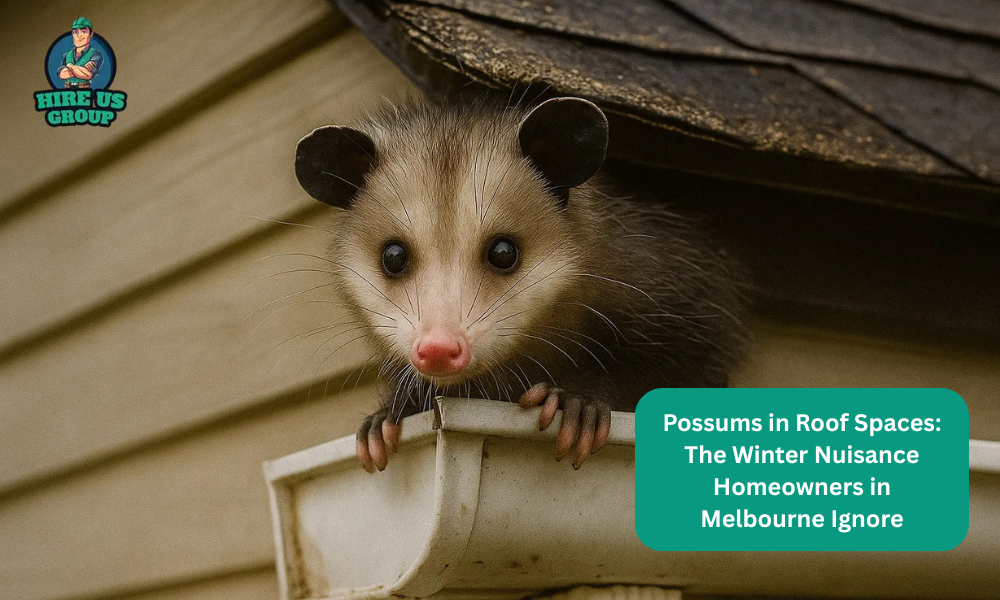
Wildlife behaviour around homes shifts a lot once winter sets in. As temperatures drop across Melbourne, roof spaces turn into an easy shelter for possums looking to get out of the wind and rain. A bit of movement above the ceiling can turn into a full nesting site fast, bringing noise, damage and bad smells with it.
A lot of homeowners assume it’s rodents, which delays getting the right help. If you know why possums get into roofs in winter, what signs to look for and what the law says about removal, you’ll stop a lot of the damage and keep the animal safe too.
Why Roofs Attract Possums in Winter
In winter, tree hollows get cold and exposed, so possums start looking elsewhere to hole up. Roof voids give them warmth, safety from predators and a quiet spot to nest.
Older roofs, damaged eaves and small gaps around the roofline give possums an easy way in, and once they find that spot, they’ll keep returning to it until it’s sealed properly.
The Entry Points Most Homeowners Never Notice:
Possums don’t usually force their way in; they just make use of gaps that build up over time.
Common access points include:
- Loose roof tiles
- Damaged fascia boards
- Gaps beneath eaves
- Openings around the roof vents
- Openings around the roof vents
These small defects seem harmless, but they’re often all the space a possum needs to get into the roof cavity.
The Hidden Damage a Nest Can Cause
Possum activity does more than disturb your sleep. Once they’ve settled in and started nesting, you’ll usually start noticing a few problems around the house.
| What Happens | What It Leads To |
| Compressed insulation | Reduced thermal efficiency during winter |
| Urine and droppings | Ceiling stains and unpleasant odours |
| Nesting materials | Blocked roof ventilation |
| Repeated movement | Wear around roof entry points |
| Food debris | Attraction of secondary pests such as insects |
Dealing with it early cuts down the chances of extra repairs later.
Possum Removal Must Follow Victorian Law
A lot of homeowners don’t realise possums are protected by native wildlife in Victoria.
Under the Wildlife Act 1975 (Victoria), you can’t just trap a possum and drop it off wherever it’s convenient. The rules change depending on the species, and removal has to be done humanely and in line with Victorian regulations. Brushtail possums caught in buildings, for instance, generally need to be released close to where they were found, while ringtail possums are managed differently.
Trying to remove one yourself can put both you and the animal at unnecessary risk.
Five Signs a Possum Has Settled in Your Roof
Some of the warning signs are easy to miss until the activity becomes a regular thing.
- Heavy thumping or running sounds shortly after sunset.
- Scratching above ceilings or inside wall cavities.
- Strong musky odours are developing inside the roof.
- Dark stains are appearing on internal ceilings.
- Droppings near roof access points or around the property’s exterior.
These signs usually mean the possum has settled in for good rather than just passing through.
Where Homeowners Go Wrong
People often seal up the entry point before making sure the possum’s gone.
If it’s still trapped inside, it’ll often chew or claw its way out somewhere else, which just adds more damage to the roof. During breeding season, there’s also a risk of separating a mother from her young.
A professional inspection identifies the active entry points before any exclusion work starts, which gives a long-term fix without putting the animal’s welfare at risk.
How Professional Possum Removal Works
A professional service handles both the lawful removal and stopping future access.
The process generally includes:
- Inspecting the roof to identify entry points and nesting activity.
- Confirming the species involved.
- Carrying out humane possum removal in accordance with Victorian regulations.
- Installing suitable proofing measures to discourage re-entry.
- Recommending maintenance to address structural gaps that attracted wildlife.
This approach fixes the immediate problem and cuts down the chance of the possum coming back.
Protect Your Home Before Winter Problems Grow
Ignoring roof noises basically never fixes anything. The longer it’s left through winter, the more settled the possum gets, and that makes it harder to sort out and more likely to cause real damage. If you suspect a possum is on your roof, calling in professional help early keeps things safe and within Victorian wildlife rules. Hire Us 4 Pest Control handles humane possum removal across Melbourne and offers proofing solutions to keep wildlife from getting back in.
FAQs
Why do I only hear possums on the roof during winter?
Winter encourages possums to seek warmer, enclosed shelter when natural nesting sites become colder and less protected. Roof spaces often provide stable conditions they need during the colder months.
Can a possum enter my roof through a very small gap?
Yes. A surprisingly small opening beneath broken eaves, loose roof tiles or damaged fascia can be enough for a possum to gain access. Identifying every entry point is an important part of preventing repeat visits.
Why do the noises seem louder at night?
Possums are nocturnal and are most active after sunset when they leave or return to their nesting site. Running, jumping and moving across roof timbers often makes the sounds appear louder than they actually are.
Is removing the possum enough to stop the problem?
Not always. If entry points remain open, another possum may use the same roof space. Long-term management usually involves identifying and securing access points once the animal has been removed in accordance with Victorian regulations.
Can possums return to the same property every winter?
They can if the conditions remain suitable. Easy roof access, nearby vegetation and sheltered nesting areas may encourage possums to revisit the same property in future seasons.
Will trimming tree branches solve the problem?
Pruning branches can reduce easy roof access, but it does not prevent possums from finding other entry points. Roof inspections and proofing measures are generally more effective as part of a long-term solution.
Why should roof damage be repaired after possum removal?
Damaged eaves, loose roofing materials and other structural gaps can continue to attract wildlife even after the original possum has been removed. Addressing these issues helps reduce the likelihood of future nesting.
Is winter the only time for possums to enter roof spaces?
No. Possums can occupy roof cavities throughout the year, but reports increase during the colder months, commonly as they seek warmer shelter and protected nesting areas.
How can I confirm it is a possum rather than another pest?
Different animals leave different signs. Noise patterns, droppings, roof access points and evidence inside the roof cavity can help identify the species, but a professional inspection provides the most accurate assessment.
When is the best time to arrange a possum inspection?
The sooner unusual roof activity is noticed, the easier it is to identify entry points before prolonged nesting causes additional damage or repeated visits.
